Why Arizona Heat Makes Windshield Cracks Spread Faster
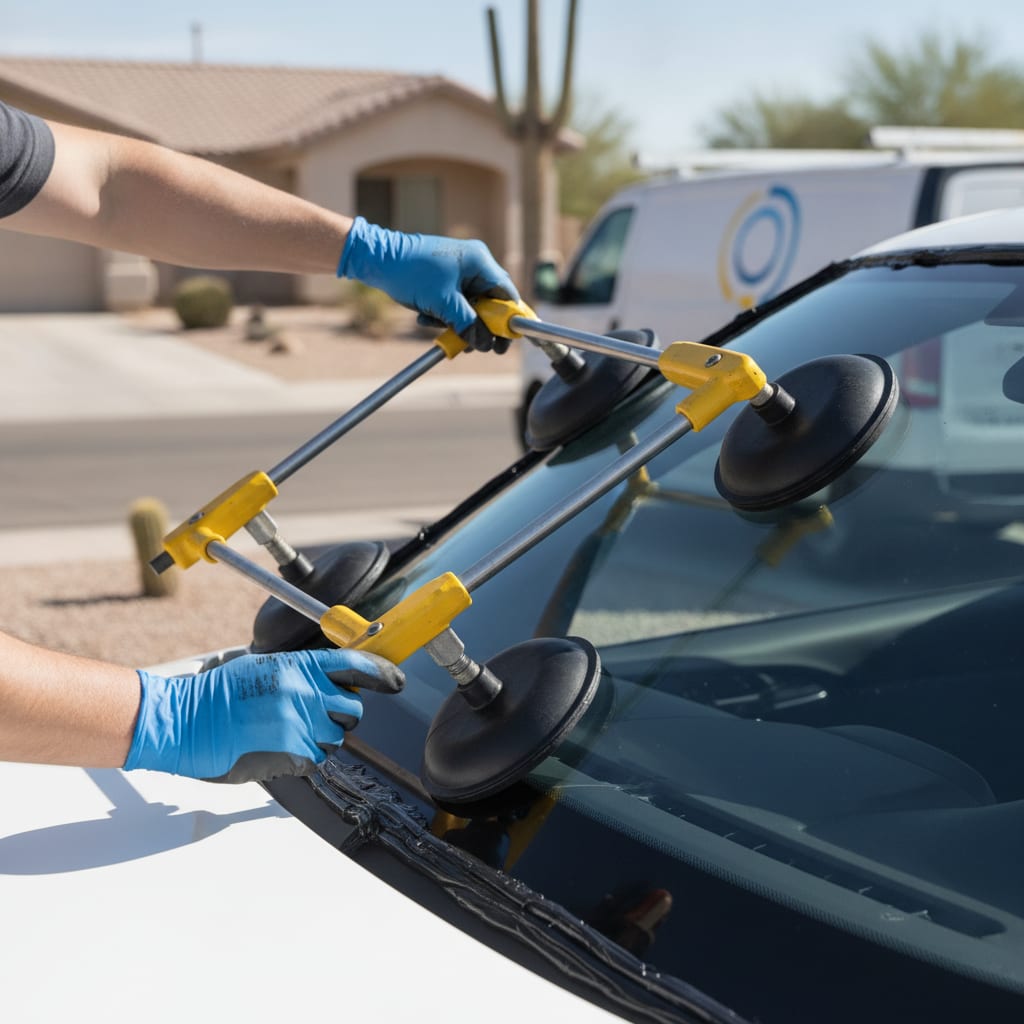
If you've ever left a small windshield chip alone for "just a little while" and come back to find a foot-long crack, you're not imagining things — and it's not bad luck. Arizona's climate is genuinely harder on windshield damage than milder regions, for reasons rooted in basic physics.
Glass expands and contracts with temperature
Windshield glass, like most materials, expands slightly when heated and contracts when cooled. Under normal conditions, that expansion and contraction is gradual and even. But a chip or crack creates a weak point — a place where the glass's structure is already compromised — and that's exactly where temperature-driven stress concentrates.
The daily swing is the real problem
In Arizona, a car sitting in direct sun can reach surface temperatures well above the surrounding air temperature, while the AC-cooled interior stays much cooler. That difference creates real thermal stress across the windshield glass, right at the point of existing damage. Do that daily, and a small chip has repeated opportunities to spread.
Sudden temperature changes make it worse
Blasting the AC on a hot windshield, or hitting a puddle of cold water on a hot day, creates an even sharper temperature differential in a short window of time. These sudden shifts are a common trigger for a chip finally giving way into a full crack — often at a moment that feels random but is actually the cumulative effect of repeated stress.
What this means for repair timing
Every day a chip goes unrepaired in Arizona heat is a day it's more likely to spread. Once it does, a job that could have been a 20-30 minute repair often becomes a full windshield replacement — more time, more cost, and more hassle than catching it early.
What you can do in the meantime
- Avoid blasting the AC directly on the damaged area
- Avoid pouring hot or cold water directly on a cold or hot windshield
- Cover the vehicle or park in shade when possible until it's repaired
- Don't wash the vehicle with high-pressure water aimed at the chip
None of these prevent spreading entirely — they just buy you a little time. The real fix is getting it looked at. If you've got a fresh chip, request a quote and we'll assess whether it's still repairable before it turns into something bigger.
Ready to Get Your Glass Fixed?
Tell us what's damaged and where you are — we'll give you an upfront quote and get on the schedule.